
The tensioning process keeps the slab in a permanent state of compression. If a crack attempts to form, the internal force of the tendons pulls the concrete back together.
Why Post-Tensioning is the Preferred Industry Standard
Post-tensioning is a method of reinforcing concrete by prestressing it. High-strength steel cables (tendons) are encased in protective sheathing and laid in a grid before the concrete is poured. Once the concrete reaches a specific compressive strength, these cables are tensioned using hydraulic jacks and anchored at the perimeter.
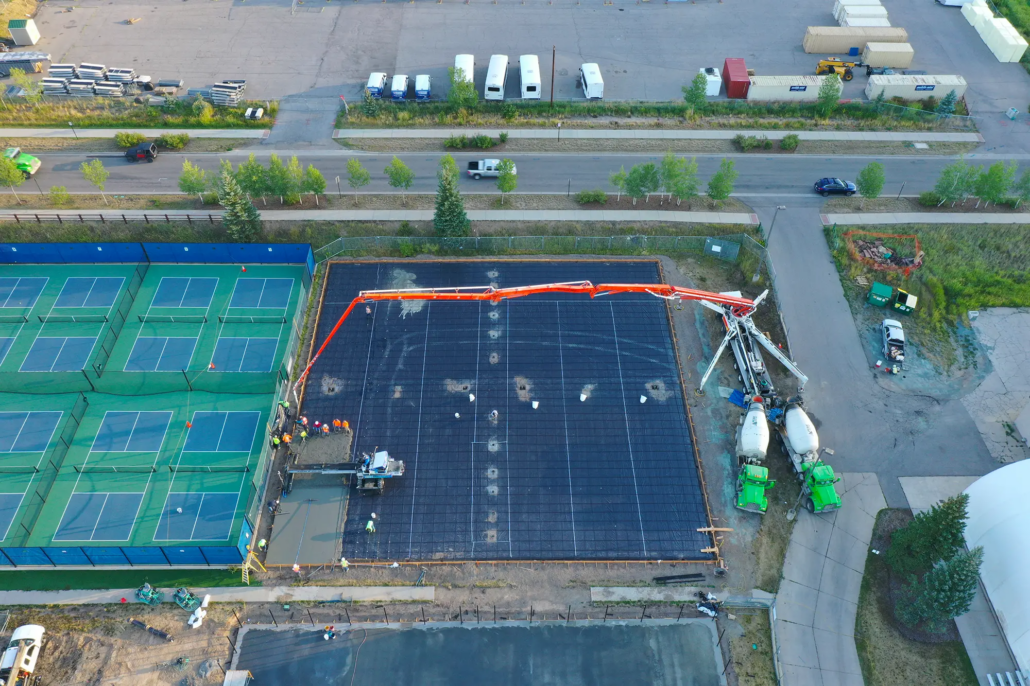
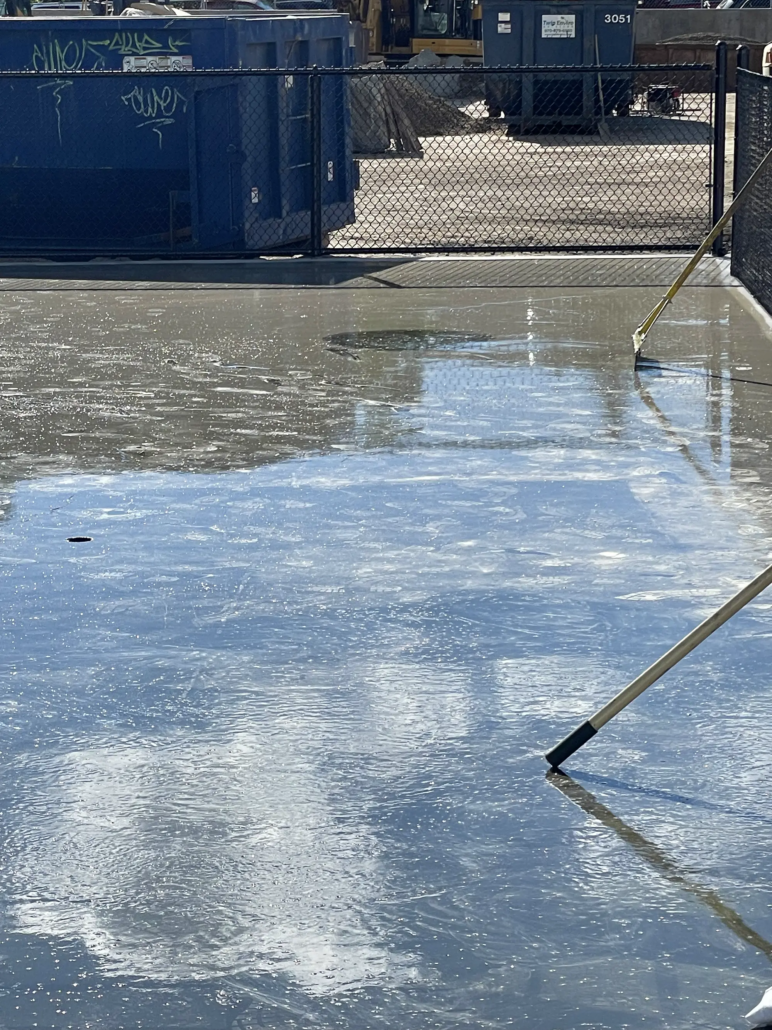
Engineered for Challenging Soil & Climates
Colorado’s expansive clay soils and radical temperature shifts are the primary causes of court failure. Post-tensioned concrete is specifically engineered to handle these variables:
The Post-Tension Construction Process

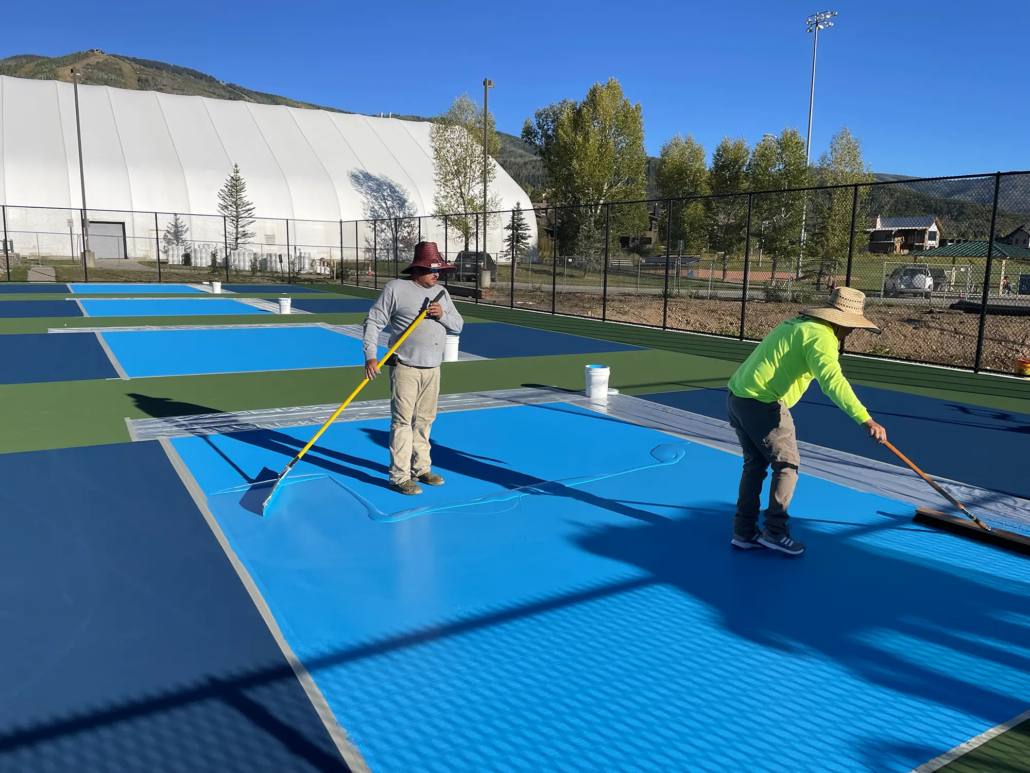
Economic Value: Upfront Investment vs. Long-Term ROI
While the initial cost of a PT concrete court is roughly 20–30% higher than asphalt, the total cost of ownership is significantly lower. Over a 30-year period, PT concrete can save owners over $60,000 per court by eliminating the need for structural repairs, crack filling, and premature replacement.